Category: children’s books

Picture Books That Entertain ME (…oh, and my toddler too…)

By , September 11, 2009 10:35 am

Have you ever fallen asleep while talking out loud?

I have and it happens most often when I am putting my three year-old to bed, reading her a bedtime story.

My voice gets softer, my words become garbled and trail off, my mouth gapes, my eyes roll up into my head, my neck flops, and just as I begin to drool on my daughter’s head (I know I am painting quite an attractive picture) - I am rudely brought to attention by an indignant cry of “WAKE UP MOMMY!!”

Maintaining my eyes focused and the words flowing freely is absolute torture! An exhausted mommy at the end of her day + warm toddler on lap + boring book = SLEEEEPPPP…….zzzzzzzzzzzz.

Let’s face it. Some young children’s books are downright BORING. What my three year-old loves, is often mind-numbing for me. Even things that seem sweet and charming and lovely when I am awake, are hideously horrible to read when all I want is to have my head on a soft, downy pillow.

I spend a lot of time reviewing books that my children like, but in this post I want to focus on me. ME ME ME ME - it’s all about ME!!!!!!

Here are a few books that I recommend for those extra-tired bedtime reads:

FUNNY

  • Anything by the wonderfully talented and funny Sandra Boynton. Cute pictures, quick-paced rhyming text, a sense of humor (and mercifully short). One of my favorites is Hippos Go Berserk which always makes me laugh out loud (kind of reminds me of my college days, or is that TMI?). In fact we read it last night, which is what inspired this post.


Once Upon a Time, the End retells popular fairy tales EXTREMELY (and very amusingly) briefly. Each tale ends with a not-so-subtle message to the listening child to “GO TO SLEEP!” My older children adore this book too. They laugh out loud, but they know when I reach for it as a bedtime reading choice, that I mean business about getting out of there and into my own bed as quickly as possible.


  • Pigsty (written and illustrated by Mark Teague), a fast and amusing read about a typical messy boy who won’t clean his room. Mom finally gives up nagging and lets him live with his mess - and the pigs who happily move into his room. The plot and illustrations amuse me, plus I am always hopeful that this story might inspire my children to clean their own personal pigsties.


  • Antarctic Antics by Judy Sierra, a collection of funny, informative poems about penguins. These clever verses make me laugh and alleviate any Mommy Guilt at rushing the bedtime process, since they are actually quite educational.

 
LIVELY

  • Chicka Chicka Boom Boom (by Bill Martin Jr., John Archambault, and Lois Ehlert) and Brown Bear, Brown Bear, What Do You See? (Bill Martin Jr. and Eric Carle) are examples of very lively, almost musical books. While not really inherently interesting for adults, I find the strong, sing-song rhythm of the text of these stories helpful in keeping me interested long enough to make it through without falling asleep. Tap your foot, slap your knee, play a maraca to the upbeat tempo of the words.
  •  

  • Mr. Brown Can Moo! Can You? (Dr. Seuss) is another book with a strong beat to its text, plus it lets you exercise your performing arts skills when you demonstrate to your children all the strange noises you (and Mr. Brown) can make. It’s hard to fall asleep while imitating a hippopotamus chewing gum.

 
MINIMAL WORDS/INTERESTING PICTURES
 

  • Any short book that is mostly pictures (preferably interesting ones) is also good when I am tired. They allow me to say as much or as little as I have the energy for. Two of my favorites are: Global Babies by the Global Fund For Children (interesting pictures of babies from around the world), and Baby Animals of the Southwest by Rising Moon Editors (not your usual baby cows and chickens here).
  •  

    • If you think can make it through the entire alphabet or the numbers 1 through 21, try Alphabet City (a multiple award-winner, including Caldecott) or City by Numbers both by artist Stephen T. Johnson. These books have wonderful photographic-quality illustrations of typical city scenes in which a letter (or number) can be found in the natural shape of a detail. It is a fascinating new way of looking at the world that captures my attention, even when sleepy. The cover art explains it best, what do you see here?


    • Look-Alikes: The More You Look, the More You See! by Joan Steiner is another amazing visual choice. Be careful though, there is so much to see in this book that it could go on all night. When you are exhausted, use this book wisely. Tell your child to find one particular item in each photo, then you’ll be much better off. I guarantee that you will find new objects in each photograph every time you look at this book (keeps it interesting for parents).


      And of course when all else fails, don’t feel bad about resorting to the old tricks of paraphrasing text and turning more than one page at a time! WARNING: Won’t work with older kids. Good Luck! ;)

     
    PS. What tricks do you have for staying awake at story time? What picture books entertain you?


    Magical Reads! By Elizabeth Orton Jones

    By , July 1, 2009 3:28 pm

    While surfing the “What Others Bought” links at Amazon one day last winter, I discovered the wonderful old book Twig, by author and illustrator Elzabeth Orton Jones (1910-2005). My 8 year-old daughter really likes tales of fairies and magic and this book sounded perfect. It WAS perfect. My daughter adored it and read it in one sitting!

    She even chose it for her school book report book, complete with a cute diorama (I wish we had saved that to illustrate this post, but alas, it was taken apart and scattered who knows where).

    This 1942 story centers around Twig (which was also the author’s nickname), a lonely little girl who decides one day to make a fairy house out of a discarded old tomato can. I will let you discover the wonderful adventure that ensues.

    I am so grateful to Purple House Press, the publisher of our 2002 edition of Twig, for their wonderful work in reprinting this lost treasure! The mission of Purple House Press is:

    “to revive long lost, but well loved children’s books. Today’s children deserve to read wholesome stories from a simpler time and we know grownups want to revisit with old childhood friends too!”

    You can still order Twig from the Purple House Press website, but all they have left are more expensive editions autographed by Elizabeth Orton Jones. We loved the book so much, that I just ordered an autographed copy to have in our collection of very special, keep always, books.

    You can also order new (from Amazon affiliate sellers only) or used copies of Twig from Amazon. Our copy was a used one from an Amazon seller but it was in like-new condition and far less expensive than the Amazon affiliates’ new editions.

    After enjoying Twig, my daughter wanted to read more books by Elizabeth Orton Jones. I searched about and found Big Susan, written in 1947 and also published by Purple House Press in 2002.

    Big Susan is about a little girl and her dollhouse (the story is based on the actual doll house and dolls that the author played with as a child). The dollhouse is in complete disarray on Christmas Eve, the one night of the year where the dolls can come to life.

    We read this story together as a bedtime book and I laughed out loud at the descriptions of the poor dolls (Nurse was standing on her head in the bathroom wash basin) and the general state of the dollhouse. It reminded me of our always-messy dollhouse. It also, sadly, somewhat resembles our own house at times (although I have yet to find myself upside down in a wash basin)!

    This is a sweet story all about Christmas magic, love, friendship and giving. My children and I all loved it and were sorry to see it end. Although it is more of a girl book I suppose, my 7 year-old son adored it and was actually the most eager to keep reading on every night.

    Big Susan is easier to find than Twig. You can order it directly from Purple House, or from Amazon.

    Trust me. These are books you’ll love and want to keep to pass down to your grandchildren!

    Here are pictures of the text of Twig, to give you some idea of the reading level (it is 152 pages long) - recommended ages 6 to 12:

    Here is Big Susan (a slightly easier reading level than Twig with only 83 pages and lots of sweet illustrations by the author) - recommended ages 6 to 10:

    Early Readers: Pirate Adventures!

    By , February 26, 2009 9:26 pm

    In my never ending quest for good early readers, I recently stumbled upon this “treasure” for pirate-loving boys: Treasure Island - Easy Reader Classics Series. I bought the first two of the set of four for my 6 year-old son who was in need of some interesting reading material.

    My son is currently at that awkward, in-between phase of reading acquisition. Even the most advanced Bob Books and other phonics-style readers are too easy and boring, but full-on chapter books are a bit too hard and could lead to frustration.

    This Treasure Island series seemed to be just the ticket. Each book is part of an ultra-simplified and abridged version of the classic adventure tale by Robert Louis Stevenson. They describe the adventures of a boy named Jim who, after finding an old treasure map, winds up on a ship in search of the lost treasure. Of course Jim must outwit the pirates who are also seeking the treasure. Is this not the dream of many young boys out there?

    My son LOVED the first two books so much (he read them immediately one after the other), that I had to get online right away and order the last two. I am not exaggerating when I say that he was literally counting the days until his books arrived. When they did, he ripped open the box and devoured them both right away. Any book that has that sort of effect on my new-reader son gets my 5 star recommendation!!

    There are other Easy Reader Classics series too: The Adventures of Tom Sawyer, The Jungle Book, The Story of Doctor Dolittle, and The Wind in the Willows. We’ll definitely be trying another set soon, especially since they are all currently part of the Amazon 4-for-3 promotion (that means you can get all four books in a series for the price of three).

    Reading Level Facts:

    • Each book is 32 pages long and is divided into four chapters so young readers can feel that they are reading a true “chapter book.”
    • The type is fairly large and there are just a few sentences on each page which is a perfect layout for short, young attention spans.
    • There are many large, colorful illustrations that I actually found to be somewhat mediocre in quality, but my son didn’t seem to mind.

    Here are some photos to help you judge the level of difficulty for yourselves:

    Betsy-Tacy (Maud Hart Lovelace) - Another Great Chapter Book

    By , February 17, 2009 10:44 pm

    I find so much good stuff by surfing Amazon! Having no “real” bookstore here and only a tiny library, it is one of my best ways for discovering great books.

    One of our latest wonderful reads is Betsy-Tacy by Maud Hart Lovelace. I believe it is something of a classic although it was new to me. Hopefully I am not demonstrating my ignorance of classic children’s literature by recommending it, but recommend it I do!
    The story revolves around two five year old neighbors, Betsy and Tacy, who become such inseparable friends, that the title of the book must be Betsy-Tacy (rather than Betsy and Tacy, get it?):

    “Betsy’s brown braids went with Tacy’s red curls, Betsy’s plump legs with Tacy’s spindly ones…” (p.1)

    Betsy is outgoing, Tacy is shy. But, after a rocky start, opposites do attract and the pair become a “unit” as suggested by the title.

    The girls enjoy simple adventures, mostly involving a lot of imagination. It is all very sweet and innocent and charming. There is nothing that I could find to scare particularly sensitive readers. Even I enjoyed reading a bit further along every night before bedtime.

    The only potentially upsetting moment is when Tacy’s baby sister dies of an illness. The episode is not really about Baby Bee, but the focus is on how Betsy sweetly comforts sad Tacy. It was well-handled and my rather sensitive children were not upset by it at all.

    The author Maud Hart Lovelace was born in Mankato, Minnesota in 1892. This series of books is about her memories of her childhood, “…the happiest childhood a child could possibly know…” (quote from Maud Hart Lovelace, inside of back cover).

    The author is Betsy, right down to the straight hair that wouldn’t curl. Her lifelong best friend Frances Kenney (known as “Bick” - baby-talk for “Brick” - due to her red curls) is the model for Tacy. The pair met at Maud’s 5th birthday party, just as Betsy and Tacy meet at Betsy’s 5th birthday.

    The book has a very interesting section at the end about Maud Hart Lovelace and her life, complete with some photos of both her and “Bick.” For even more information, there is a Betsy-Tacy Society in Mankato with its own website: www.betsy-tacysociety.org. If you want to, you can even attend their Betsy-Tacy Convention from July 17-20, 2009 in Mankato, MN.

    DETAILS - 14 Chapters plus author information, 122 pages, fairly large type-face, some line-drawn illustrations.

    Hmmm…..I guess these books are way more popular than I realized.

    Enjoy!

    PS. We’ll be reading all the others ASAP. By the way, although these books would obviously appeal to girls, my 6 year-old son was just as captivated as his 8 year-old sister. If you have a young boy, you might want to try one from the library because he just might love it also!

    Here are all the books in order:

    Easy Homemade Musical Instruments

    By , January 14, 2009 10:25 am

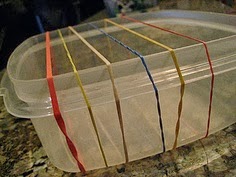
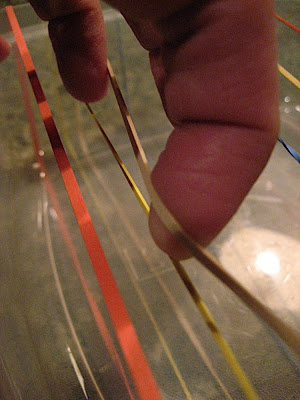
    Thanks to a wonderfully creative music teacher at my children’s Montessori school, the latest fad around our house are little homemade guitars/harps like that shown above. The kids are loving putting different sized rubber bands around my food storage containers and then experimenting with the sounds produced.

    The sound reminds me of a kalimba. It’s a little hard on me when I need to put away some food and can’t find any containers, but…oh well. I can adjust.

    These simple little string instruments made me think that a post about quick and easy homemade musical instruments might be fun to write. I obviously won’t be anywhere close to covering all the homemade musical options, so if you think of something I forgot, please leave your idea in the comments.

    If you are here because you are looking for musical instrument ideas, then be sure to read the comments for more ideas. Unplug Your Kids readers are very creative!

    Here are my ideas:

    • Let gourds or squash dry out. Once they are completely dry, the exterior will be hard and when you shake them, the seeds will rattle around inside. You’ll have some nice, natural maracas.
    • Quick maracas: Fill plastic Easter eggs with rice or lentils and tape shut. Instant shakers!
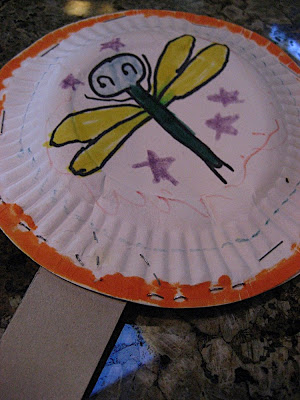
    • Paper plate maracas: Put some dried beans on a small paper plate. Cover with another, upside down paper plate. Staple the two plates together around the edges to seal them shut. Add a cardboard or popsicle stick handle if you want, then decorate. Here is ours:

    • Wrap tissue paper around a fine tooth comb and make “Doo-doo-doo” noises through it for a kazoo sound.
    • Flip over empty cylindrical cardboard oatmeal containers and bang on the bottom to make a drum.
    • Line up a row of glasses and fill each with a different amount of water. Tap them with a spoon and note the different pitches. Play a tune!
    • If you have a thin-rimmed wine glass, fill it with water. Wet your finger and rub it slowly and gently around the rim to create your own glass harmonica. It might take a bit of experimenting to figure out exactly what pressure you need, but the results are impressive. Experiment with more water in the glass and less water. What happens to the pitch? What about an empty glass?
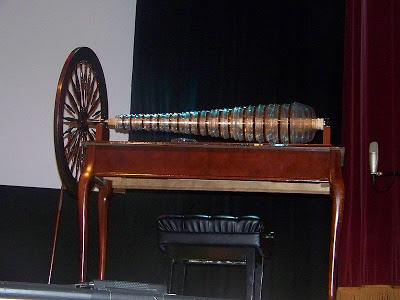
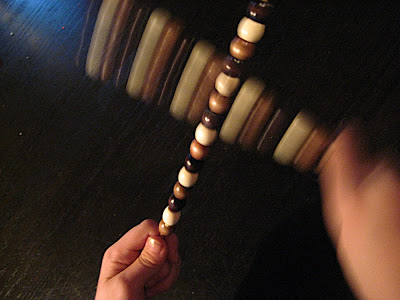
      NOTE: Benjamin Franklin invented a mechanical glass harmonica like this modern one based on his design (he called it an “armonica”):

    If you have never heard it, you must listen to the rather fairy-like sound of an armonica!

        Can you play a tune with several glasses with different levels of water? You might not sound

    this good

      , but it’ll be fun!
      • Blow across a glass soda or beer bottle like you would play a flute. Unless you play the flute, it’ll take a bit of practice. Adjust the angle of the bottle against your lips until you get it right. It will make a lovely tone. Different levels of liquid will produce different tones. What about lining up many bottles with different levels of liquid and playing a song?

    (NOTE: Great related link - Bottled Music. This link tells exactly how much water is needed in a twenty ounce bottle to produce each particular note of the scale, and even has instructions for playing Row Row Row your boat on the bottles.)

    I didn’t think these sounded too much like crickets, but they do make a cool sound for your musical instrument collection! Learn how to make them here.

    • Another craft idea: Sandpaper blocks - Wrap sandpaper around two blocks and attach it to the back with thumbtacks. For easier handling you might want to attach a knob to the back of each block (with glue or screws). Rub the blocks together for a cool sound. Try coarser and finer paper for different sounds.

    And of course, the obvious: turn your 2 year-old loose in your pots and pans cupboard for lots of drums, cymbals and noise music.

    That’s it for what’s in my brain right now, but Googling “homemade musical instruments” produces lots of cool results.

    Here are links to a few of my favorites:

    Jingle Sticks

    Rainstick

    Didgeridoo

    Inventing Homemade Instruments with Math and Measurement (a wonderful website that teaches the science of music!)

    Artists Helping Children (a very long list of many musical instrument craft links - useful!)

    For a book that has some fun instrument games and activity ideas for young (preschool) children to use their homemade (or non-homemade) simple instruments, consider 101 Rhythm Instrument Activities: for Young Children by Abigail Flesch Connors:

    NOTE: This is a great book to use with young children, older ones might find it boring.

    Blog Widget by LinkWithin

    Panorama Theme by Themocracy