Sometimes I am a glass half-full type of person, and sometimes I am more inclined to be a glass-half empty type.
About peace…I think I am running on empty. I feel that throughout history there never has been peace. There never will be peace in the future either. It is just human nature to fight.
Religion, which is supposed to be all about peace (no matter what the religion), seems often to make matters worse. The Crusades, the Inquisition, etc. I’ll stop my brief list there so as to not get myself into too much trouble.
The glass half-full part of me says: “Hey, wait a minute! Why not start with the children?”
Well, why not start with the children? What an excellent idea. If all the world’s children could learn about and appreciate other cultures, races, and religions, then wouldn’t there HAVE to be peace?
Glass half-empty says: “There is no way to teach every child in the world these things!”
Glass half-full says: “Maybe not, but the way to start is with our own children. Let’s teach them about the beauty of diversity.”
Yes let’s.
+++++++++++++++++++++++++++++++++++++++++++++++++++
Here are ten thoughts on how to do that:
1) Have your child learn a foreign language, either through their school or through home, online or language school study. The US is one of the only countries in the world where a child/adult can get all the way through school, and even college and beyond, without learning another language.
2) Take your children to local multicultural events such as Chinese New Year celebrations, Greek festivals, etc. Check your local paper for details.
3) Travel with your children, which leads to the next suggestion:
4) Get your child a passport now so that he or she can travel with you when old enough, and the opportunity for foreign travel arises. Passport processing is taking a long time these days, so why not simply put it on your to-do list and get it over with right away. (Most US post offices can issue passports and even take the passport photos, it is very easy). By the way, passports are now required for air travel to Canada, Mexico, the Caribbean and Bermuda, even for infants.
5) If your children are teens and are interested…let them be an exchange student. I did it as a teen (twice) and it totally changed my life!
Youth for Understanding (the program I used)
AFS Intercultural Programs
ASSE
6) Host an exchange student in your home (it doesn’t have to be for a year, it can be a semester, a summer, or even less!) Check out links above, or Google “international student exchange.”
7) Get your child a penpal. Google “penpal” for some sites that can arrange this. Being the paranoid parent, I would check it out carefully first though before signing up. I would choose a “snail mail” penpal over an email one, and would monitor the whole thing very carefully. Check with your child’s school too. Often penpal arrangements can be made through a teacher at school. If a teacher has contact with a teacher in a foreign country, many times classes can exchange letters.
8) Go to the library and check out an international cookbook. Cook an exotic foreign meal together, talk a little about that country, and find it on the map or globe.
9) If you and your family are really in the mood for adventure, either rent a house in a foreign country or do a house swap. A house swap is where you trade a month in your house, for a month in someone else’s house for example. Sometimes the trade even includes the use of a car. There are many websites dedicated to rentals and home swaps. The classifieds in the back of alumni magazines are also a good source. Many college alums prefer to rent their foreign house or apartment to another responsible alum rather than a total stranger.
Here are some house swap websites (note: I am not personally familiar with any of these):
HomeLink International
Home Exchange
Home Xchange Vacation
10) And of course the simplest and cheapest way to expose your children to other cultures, is to read to them. Go to the library. Read multicultural books to your children. Check my International Children’s Book Day post for detailed suggestions of books and web links to books for some ideas.
For inspiration, here are some of our favorite multicultural/international books. The last one is a real eye-opener: Material World: A Global Family Portrait , is geared more toward adults, but children will find it fascinating too, when read with an adult.
(For more info on two of these titles: I have written posts about Wake Up World, and Let’s Eat - plus another here about Let’s Eat)
Dona Nobis Pacem…Grant Us Peace - PLEASE!!!
Please visit Mimi’s Blog to find links to many, many, many more Peace Posts today.
Also, for more thoughts on peace, please visit my June Dona Nobis Pacem post.

 Comments (3)
 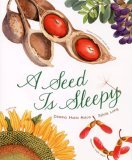 Spring is in the air which means that seeds of all kinds will soon be sprouting: flower seeds, tree seeds…weed seeds. (Big sigh.)
 by Dianna Hutts Aston and Sylvia Long.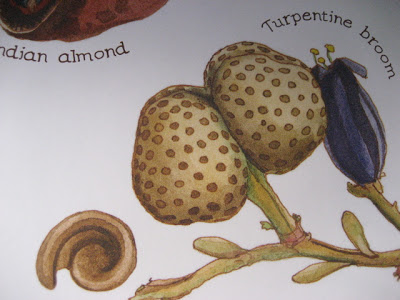

 Book Recommendations, Everything Else!, children's books, educational, exceptional illustrations, gardening, kids' books, nature, nature, older children, picture books, young children
|
Book Recommendations, Everything Else!, children's books, educational, exceptional illustrations, gardening, kids' books, nature, nature, older children, picture books, young children
|  A Seed is Sleepy, Book Recommendations, children's books, Dianna Hutts Aston, educational, educational books, educational/homeschool, nature, nature books, science, science books, seeds, Sylvia Long






 Themocracy