Category: kids’ books

Rocks (Weekly Unplugged Project) - Petroglyphs

By , March 30, 2008 7:29 pm

It has been a week full of rocks during Spring Break at our house in Albuquerque: a trip to Petroglyph National Monument, climbing over big rocks on a mountain hike, choosing pretty tumbled rocks to buy at the Natural History Museum gift shop, collecting rocks in the courtyard.

So, although I didn’t realize that we would be so into rocks this week when I chose the Unplugged Project theme last Sunday, it has been an excellent week for a rock project.

My son was too busy with his new Legos this week to care much about projects, but my oldest daughter wanted to make her own petroglyph. The children have both recently studied petroglyphs at school and I think that Petroglyph National Monument made a big impression on them.

We found what we thought would be a suitable flat rock (note: if you try this, make sure you choose as soft a rock as possible), and used a hammer to break a piece of it off to use as a chisel. We were trying to be authentic!

My daughter drew her design on the rock with a pencil. She was trying to reproduce one that we had seen at the Monument.

She then scraped the rock with the other rock to engrave the design.

Well, this proved to be slow going (the rock was not soft enough), so she got fed up and moved on to authentic Native American method number two: the Dremel Tool! My husband supervised this step and the petroglyph was quickly completed.

In case anyone is interested, here’s another fun rock idea that we once did: cracking open a geode!

Other petroglyph resources:

+ Draw your own rock art printable

+ Hawaiian petroglyphs to print and color

+ Info about petroglyphs: Petroglyphs.us

+ Fun art project: Sandpaper Petroglyphs

+++++++++++++++++++++++++++++++++++++++

If you joined us for the Unplugged Project this week, please leave a link in Mr. Linky, as well as a comment in case Mr. Linky fails at his job. If you didn’t join in, please consider taking part next week!

+++++++++++++++++++++++++++++++++++++++

Next week’s Unplugged Project theme will be:

Books

Hope to see you then!

A Seed is Sleepy (Aston, Long) - Book Recommendation

By , March 1, 2008 10:19 am

Spring is in the air which means that seeds of all kinds will soon be sprouting: flower seeds, tree seeds…weed seeds. (Big sigh.)

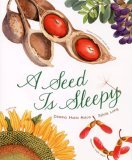
Now is a good time to teach your little ones a bit more about seeds. I can’t think of a more lovely book for this purpose, than A Seed Is Sleepy by Dianna Hutts Aston and Sylvia Long.

This book is packed with interesting facts about seeds. Each two page-spread presents a one sentence fact, followed by a short explanation. For example the first page says: “A seed is sleepy.” Followed by: “It lies there, tucked inside its flower, on its cone, or beneath the soil. Snug. Still.” The information is presented in a sweet, almost poetic way that makes it easily accessible and enjoyable for a variety of ages.

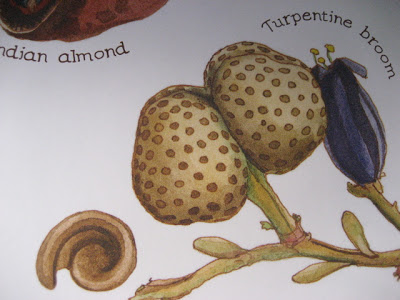
What really makes this book truly wonderful though, are Sylvia Long’s amazing illustrations reminiscent of old, botanical prints. Her colorful paintings are incredibly rich and detailed. Ms. Long has a real eye for seeing and reproducing the beauty and wonder of even the simplest natural objects.

We love this book so much, that next on my wish list is Ms. Aston and Ms. Long’s other collaboration: An Egg Is Quiet

Oh…and it’s also "Children’s Book Week!"

By , November 13, 2007 7:29 pm

Here I am, ruminating in my corner about Christmas and fussing to myself about the annoying day I have had (running late…then a glass fell and exploded all over the kitchen/dining area requiring extensive and immediate vacuuming…running really late…then forgot it was son’s “Snack Day” so had to rush to grocery store on way to school…running really, really late, etc, etc…all day long). Meanwhile, it is Children’s Book Week this week and a good part of my blog is about … children’s books!

Oh well, I blame Pluto and my biorythms.

I discovered that it is Children’s Book Week by finally catching up on some of my blog reading and finding this interesting post at Not Quite Crunchy Parent. MC Milker cites an interesting statistic in her post:

“…60% of children’s books sold are entertainment tie-ins or based on licensed characters.”

I find this fascinating, yet not surprising. In this day and age it is pretty obvious that a child can see the movie, watch the TV show, buy the plush toy and the action figures, go to McDonald’s and get more toys, and read the books all tied in to the same commercial character.

I guess this is all a form of “branding.” However the flip side is that if it takes Sponge Bob, Care Bears, or Transformers to entice a child to read, I suppose these books do serve some purpose. But there are so many other WONDERFUL children’s books out there, that you don’t have to settle for boring, silly, and commercialized.

Even if you have spent only several minutes reading this blog, I think you will probably have figured out that my preference leans towards what I call “Unplugged Books,” books that do not tie in to TV shows or movies. As MC Milker points out, these books can be harder to find. Walmart doesn’t usually carry them, and even at a “real” bookstore like Barnes & Noble or Borders you might have to know what you are looking for when you go in, or at least be prepared to spend a lot of time digging around.

Of course, root around your local library too. Sometimes a good children’s librarian will put interesting, high-quality, lesser-known books on display. Those displays can be a good place to start.

Where I live, our only non-religious book sources are Walmart, Kmart, and a tiny, poorly stocked bookstore. Our library is pretty small too, so I end up buying a lot of books online.


My tricks for finding “Unplugged Books” online are the following:

- Find some online toy stores that sell “natural” or “Waldorf” toys and see if they sell books. Many of them do. I can guarantee that you won’t find any Sponge Bob or Scooby Doo at those stores (or save time and check my Unplugged Book Stores list).

-These types of “natural” stores often have links to other similar stores or websites, and those links might lead you to books. Look for a “links” section in the main page index.

- Find an interesting-sounding recommended title on a blog (such as mine!) and pull it up on Amazon. Look at the section labeled “Customers Who Bought This Item Also Bought” and any “Listmania!” links that might appear in the left sidebar. I often find wonderful books I had never heard of, simply by following these links. Also, check for other books by the same author. I guess this is the online equivalent of browsing at a good library. I love it!

- There are a lot of blogs out there that often write about children’s books. You won’t find these bloggers recommending anything too mainstream either. The blogs I am familiar with that often recommend children’s books in the posts or sidebars are the following:

Painted Rainbows and Chamomile Tea

Wildwood Cottage

A Wrung Sponge (the blog author, cloudscome, is a children’s librarian)

The Rowdy Pea

The Owl and the PussyCat

Jen Robinson’s Book Page

If you know of other useful children’s literature blogs, please tell me about them in the comments.

- Of course, I must humbly mention that I also write a lot of reviews of children’s books. You can find them by clicking my category “kids’ books” (right sidebar, “What I Write About” drop-down menu). You can also click the subcategories to help find the kind of books you are looking for.

- Lastly, in case you missed it earlier, I should once again direct you to my list of Unplugged Book Stores (top right sidebar). These are stores that sell non-mainstream, “Unplugged Books.” Please check the list regularly because I am always adding new links as I find them.

I hope you find this advice helpful in your search for great children’s books. It takes a bit more effort, but trust me, the results are really worth it! Have fun!

Raising Environmentally Aware Children (Blog Action Day)

By , October 15, 2007 12:01 am

I truly believe that the way to raise environmentally aware children is to instill a love and appreciation of nature at an early age.

Here are some ideas and resources to help parents encourage a love of nature in their children. Just one of these ideas alone may not make much of a difference, but a combination of several should begin to have an impact on the way children perceive the world we live in. I hope so anyhow! Please give some of these a try:

1) Get your kids outside! Go for a hike, or even a walk around the neighborhood. The National Wildlife Federation has a website for parents and kids called The Green Hour which is filled with ideas for what to do outside. Also check out Backyard Nature with Jim Conrad for 101 nature-oriented activities that change seasonally.

2) Have your kids plant a small garden. If you live in the city, have them plant a pot or two on the deck or even in a sunny window. Here are some of my tips for gardening with children: The Children’s Garden.

3) Subscribe to nature magazines for children such as Zoobooks (ages 4-12), Zootles (ages 2-5), National Geographic Kids (6-14), National Geographic Little Kids (ages 3-6), Ranger Rick (ages 7 and up), Your Big Backyard (ages 3-7) or for really little ones (ages 1-4) - try the National Wildlife Federation’s Wild Animal Baby. Not only do these magazines teach kids about nature, but they encourage reading too!

Note: Ranger Rick must have been around for eons, because even I remember getting it, and loving it, as a child.

4) Subscribe to a nature club such as the Arbor Day Foundation’s Nature Explore Club.

5) Put out a bird feeder, or better yet, a variety of bird feeders (hummingbird, thistle seed, suet feeders, platform feeders, peanuts in shells, as well as the traditional sunflower and millet varieties). Even in the city it should usually be possible to hang a small feeder outside a window. If you can put out a bird bath, especially a heated one for climates with cold winters, you will notice an even greater number of bird visitors.

6) Get a kit for raising butterflies, frogs, ladybugs, or hermit crabs for example.

Or how about an ant farm?

Or my personal favorite…sea monkeys!

7) Set an example. Whether we like it or not, kids model parents’ behaviors. Show your own interest in nature, and point out interesting animals, insects, plants etc. on a daily basis. To inspire yourself, I suggest reading Rachel Carson’s book The Sense of Wonder. Read my review of it here. Also, you can check out the adult resources here, at the Hooked on Nature website.


8) Come up with some nature-themed art projects for your children, or recycled art. Good resources for ideas are: Nature’s Art Box, Recycled Crafts Box, and Earthways: Simple Environmental Activities for Young Children

If you are interested, I reviewed Earthways here.

9) Involve children in your recycling. Let them help sort. Take them with you when you drop it off. Older children might benefit from a book like Down-to-Earth Guide To Global Warming. Read my review here for more information.

10) Read nature-themed stories to your children. Here are some suggested reading lists by age from the Hooked on Nature website:

Ages 3-8
Ages 6-14

11) Set up a seasonal nature table in your home where children can display their outdoor finds. A fall table for example might have fall leaves, acorns, and pine cones, whereas a spring table might have spring flowers, feathers and grasses. Change the table seasonally and see what wonders your children come home with.

12) Start solstice celebrations in your home. Explain about the movement of the Earth, what causes the seasons, and what the solstice means. Last year we had our first annual solstice celebration on the winter solstice. We lit candles and had a special meal. The children gathered whatever they could find outside to create the centerpiece (pine branches, pine cones, rocks, and twigs). They still talk about that evening more than any other holiday celebration that we have had! I believe that being more aware of the natural rhythms of life, helps build an awareness of the importance of nature and the planet.

++++++++++++++++++++++++++++++++++++++++++++++++++++++++

I really wish I had begun this post three weeks ago instead of last night, because I know that there are many more great ideas for getting kids excited about nature and the environment. This will definitely have to be an ongoing project for me.

I hope you have enjoyed my ideas, and will find them useful. The main point is that children are the future of out planet. Get them outdoors and teach them just how wonderful our planet is…PLEASE!!!!

What Goes Around, Comes Around…

By , October 3, 2007 11:00 pm

Thank you all so much for the comments on Monday’s post (The Great Candy Dilemma). Your interest truly warmed my heart and I was so pleased to see a few new commenters. Thank you!

It is funny how something so small as a comment from a reader can really make a blogger’s day, and I am sure all bloggers would agree. In cyberspace, a comment can be like a handshake, a pat on the back, even a hug. It makes me happy to know that I have reached someone and they have reached back.

Before I get all mushy and sentimental here, I’d better get to my point. A comment makes me happy. When I am happy, I make my kids happy. They then make their teachers and class mates happy, etc. etc. etc. Pay it forward. Good karma. What goes around, comes around. Whatever you call it, it is a fact of life, and one that I would like my children to learn.

My pleasure from all your virtual hugs and handshakes reminded me of a few books that we have that help kids understand the whole “pay it forward” idea.

Love and Kisses (Author: Sarah Wilson, Illustrator: Melissa Sweet):

First is a book for little ones called Love and Kisses. I read this to the baby tonight, it is one of her favorites although she is probably too young to “get” the deeper meaning. I bought it in board book format when my now seven year-old was a baby, and it has held up really well even after being loved by three children.

The story begins with a little girl blowing a kiss to her cat, “Blow a kiss and let it go. You never know how love will grow!” On the next page, we see the little girl kissing her cat again. On the following page the cat kisses a cow, who kisses a “giggling goose,” who kisses a fish, etc. etc. You get the idea. The kiss passes through a variety of very sweetly illustrated animals and ultimately ends up where?? Yes of course! Back to the cat, then to the girl. The last two pages say: “Kisses! Kisses! Smooch and smack! You’ll have your love and kisses back!”

This is such a happy little book. Even though the message is profound, it still makes for a happy, uplifting bedtime read that toddlers can enjoy. The text is a melodic rhyme and the illustrations are really cute and funny.

The book comes new in a board book or paperback format (both are eligible for Amazon’s 4-for-3 promotion), or you can find used hardcovers. I personally recommend the board book version since mine has lasted forever, and toddlers really like this book!


Because Brian Hugged His Mother (Author: David L. Rice, Illustrator: K. Dyble Thompson):

This book tells the story of little boy Brian who woke up one day and decided to run into the kitchen and give his Mom a big hug and kiss, and tell her he loved her. Of course, “Brian’s mother felt loved and appreciated” and made Brain and his sister Joanna their favorite breakfast. So, at school, Joanna helps her teacher, who then does something nice for the new principal, who was so happy, that she was lenient with a misbehaving student and so on, and so on.

Of course, after passing through many different people in Brian’s town, the kindness eventually ends up with a police officer who catches Brian’s Dad speeding, but because she is feeling “supported and honored,” she gives him a warning instead of a ticket. Brian’s Dad, feeling “grateful and relieved” reads an extra long time with Brain before bed. That made Brain feel “loved and treasured” so he had pleasant dreams, slept well, and awoke feeling great. He then ran to the kitchen to give his mother a hug!!

As you can glean from my summary, not only does the book teach the concept of karma very simply and plainly, but it is also provides a wonderful opportunity to discuss feelings. Each character feels differently (in a positive way) after being the recipient of a thoughtful deed. A discussion of words like “valued,” “accepted,” “respected,” or “honored” can really enhance a child’s understanding of the many nuances of positive emotions.

The illustrations consist of quite life-like watercolors that nicely depict the scenes of daily life that accompany the text.

Because Brian Hugged His Mother is available new in a paperback (another 4-for-3 book at Amazon!), or used as a hardcover.

Karma Cards - Kids Set

OK, I promised books, but this is not a book. It is a set of cards. “Santa” left these cool cards in my oldest daughter’s stocking last Christmas. For a long time we were doing one of these every morning and a Sweet Dreams Card every night before bed. While the Sweet Dreams Cards are still a “must” before bed, the Karma Cards have fallen a bit by the wayside lately, perhaps due to our hectic morning schedule (ie. Mom isn’t a Morning Person). Well, we rediscovered them during a room cleaning and my daughter is “into them” again!

I am not a baby flashcard sort of mom, but for the right child, these cards seem to be a fun way to teach the pleasures of positive actions. Since my daughter is so hooked on the Sweet Dreams Cards, these work for her.

The idea is that a child chooses one of the 25 cards and does what the card says at some point during the day. Some examples are: “Choose one of your toys to donate to a charity,” and: “Find a penny dated the year of your birth and give it away to someone special.” Most of the cards spread kindness to others, or help you feel better about yourself. Several are merely useful in a more practical sense, such as practicing a family fire drill, or learning the words to your national anthem.

In case you feel like you could use a little karmic nudge yourself, there are also Karma Cards for adults with a variety of themes (including Karma Cards for the Environment - that is my personal area of deficiency and guilt). I have not looked at any of these adult sets, but stop by the Karma Coaching Cards website to see what else they offer. These cards are recommended for children ages 5 and up - with adult supervision.

Blog Widget by LinkWithin

Fight World Hunger

Panorama Theme by Themocracy