“Page” - February’s Monthly Unplugged Project

By , February 1, 2011 11:01 am

Wow, it is February already and time for a new Monthly Unplugged Project theme! The theme for February will be:

Page

For more information on how to join in with the Unplugged Project, you can read up on it here. You have until March 1st to post a link to your project (or a description of your project in the comments for non-bloggers).

I have also recently added a list of all past Unplugged Project themes with links to each post. Check it out if you want a little inspiration in your life.

I hope many of you will join in this month!

(Please only link to “page”-related projects. In an effort to keep this a useful resource, I will have to remove unrelated links, no matter how nice your website.)

Invisible Ink Messages (“Messages” Unplugged Project)

By , January 23, 2011 4:00 pm

All spies love invisible ink. In honor of this month’s Unplugged Project theme of messages here are two simple methods for making secret, invisible ink messages out of ordinary ingredients.

++++++++++

LEMON JUICE:

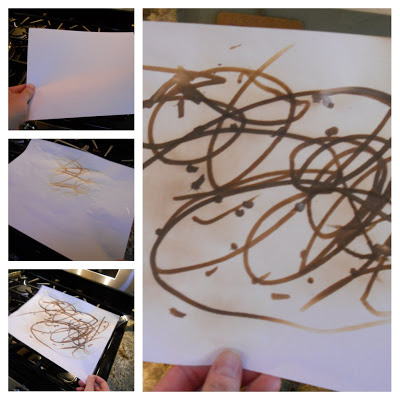
Either squeeze a lemon or be lazy like me and use that store bought lemon juice that comes in the little plastic lemon! Put the juice in a small dish and use a cotton swab to write your secret message.

++++++++++

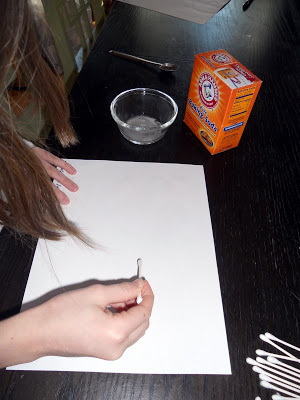
BAKING SODA & WATER:

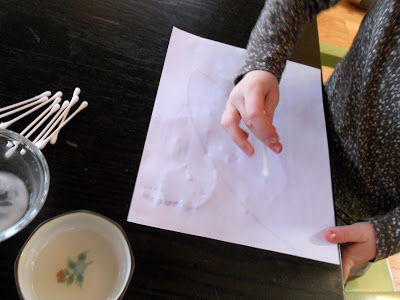
Mix together equal parts baking soda and water in a small bowl. Again, use a cotton swab to create your message.

++++++++++

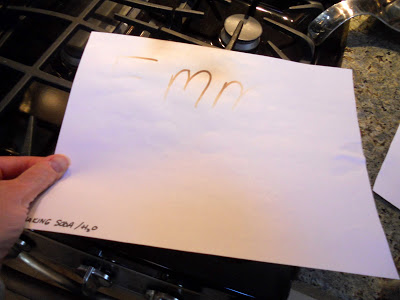
Once the messages are completely dry and can no longer be seen on the paper, hold the paper over a heat source and the message will magically be revealed to guaranteed “oohs and aahs!” (Obviously an adult should complete this step, especially with young children, so as to avoid burns and flaming paper.)

By the way, we found that the baking soda produced a slightly darker result than the lemon juice.

NOTE:

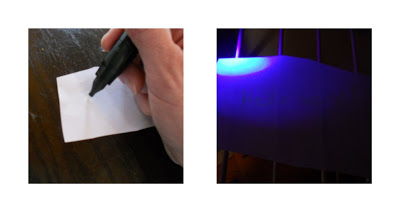
For those whose children channel James Bond rather than Martha Stewart, a high-tech invisible ink spy pen complete with built-in ultraviolet decoding light might be just the ticket. My son found this one in his Christmas stocking:

LINKS - More about invisible ink:
The Naked Scientist - Secret Messages-What Makes an Invisible Ink?
Kidzworld-How Invisible Ink Works
Science Project Ideas - Invisible Ink (this site has some other interesting methods too)

Secret Codes: The Cardan Grille (“Messages” Unplugged Project)

By , January 10, 2011 2:39 pm


My two oldest children are really into secret codes at the moment and when I asked them for suggestions for this month’s Unplugged Project theme, my 8 year-old son immediately said “Messages! We could make codes!”

So here is our first code, a version of the famous code known as the Cardan Grille. For this code, a special template is used to encode and decode a message. Here’s how we made ours:

You’ll need paper (graph paper makes it much easier), a sharp pencil, scissors, a ruler, and a box cutter or razor blade.
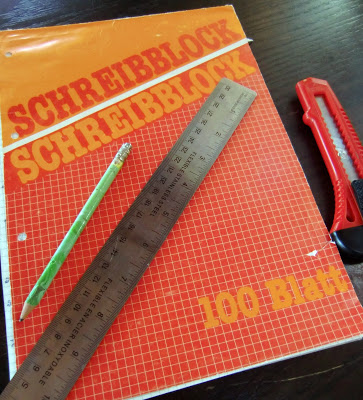
First mark out evenly spaced boxes on your graph paper. You will be cutting some of these into square openings, so you’ll have to leave some blank space around each box. (Our boxes were two graph squares wide and two squares tall with one blank square between rows.)

First we marked off rows of squares then we drew the grid using the ruler.

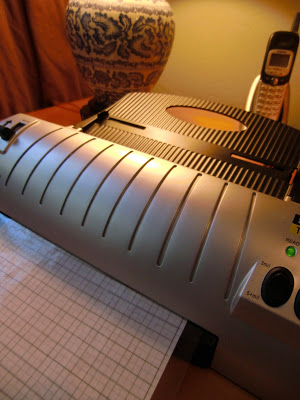
Next we laminated our paper. If you don’t have a laminator, you might want to paste it to some stiff cardboard or posterboard just to make it tougher. If the grid gets lost or destroyed, no one can crack the code and you will be fired as a secret agent!
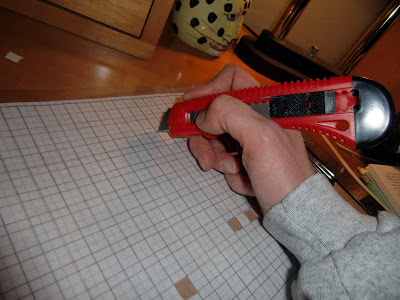
I used a box cutter to cut random squares out of the grid. I put an old wooden clipboard underneath in order to avoid damaging the desk. You could use pointy scissors for this step, but a razor-type blade makes the job much easier. (Obviously, an adult should do this step.)
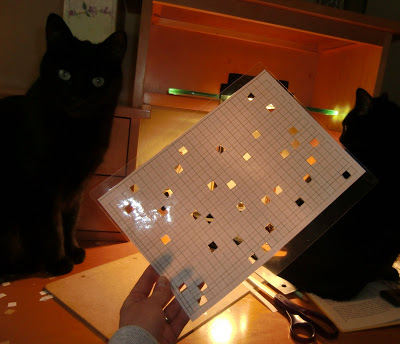
The finished template (with my “helpers” in the background):
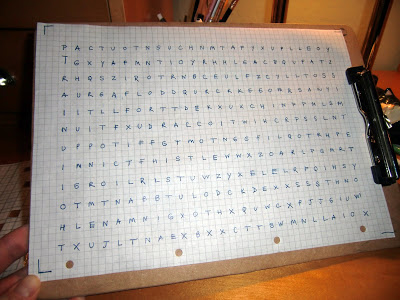
Now you are ready to encode. Place the template over a fresh sheet of paper. Mark around the corners with a pen to make it easier for the decoding person to line it up. Write your message (one letter goes in each square).

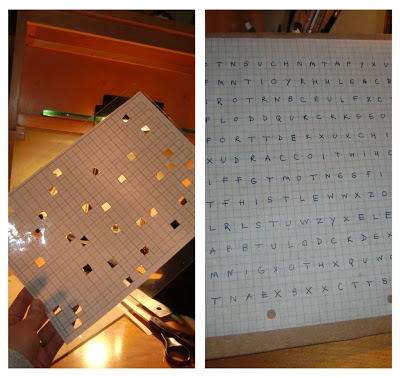
Remove the template and fill in all the open squares with random letters. Can you figure out what this says?
Here is the solution:
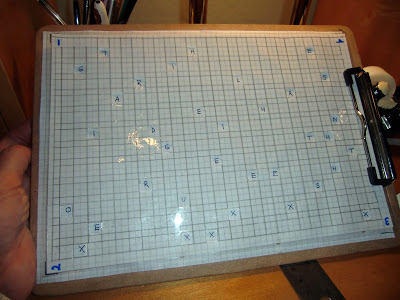
(“The girls are hiding the treehouse.” - OK, so it was supposed to say “The girls are hiding in the treehouse but we forgot the “in.” But coded messages are supposed to be brief, right?)

NOTES:

  • You can make your template as big or as small as you like.
  • For ease of communication between spies, you really ought to make a duplicate template so both sender and recipient have their own. Just place the first template over a new piece of paper, trace the locations of the squares, laminate, and cut out.
  • I numbered the corners of the template 1 - 8 because you could use both sides and all four orientations to create different messages, or even one long one.
  • Traditionally, the template was placed over an ordinary letter (see the example here) but it can be very challenging to come up with a natural sounding message built around the coded text. I gave it a try though and it was a fun mental exercise:
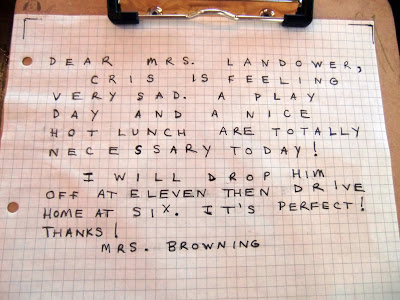
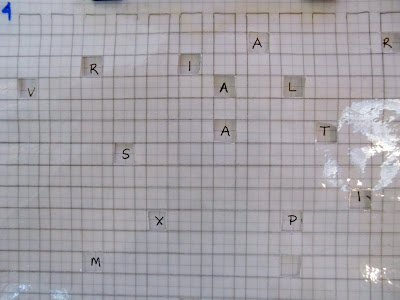
(“Arrival at six PM.”)

Teens Unplug: No Facebook or Texting

By , January 8, 2011 11:21 am

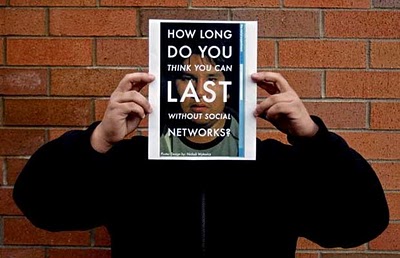
More than 600 teens from a high school in Washington State recently conducted an experiment in which they quit social media-use and texting for one week. Thanks to teacher Trent Mitchell who came up with this “Social Experiment” (Theme: “What was life like in 1995?”), kids learned to communicate the “old-fashioned” way: by calling friends and parents on the phone and actually speaking. Many of the teens had never spoken to friends on the phone before, and found that their friends were awkward conversationalists:

But [Cole Sweeten, 17] likes getting calls. He prefers a real “Hey, how are you?” to a “Hello” text with a smiley face. “People sound different when they’re on the phone,” he said. “It’s emotion, not just little lines.”

Another teen, Eimanne El Zein, 17, reported that it felt “weird” giving it up, but that each day got easier and she was able to take more time for exercise, like running with her dogs, something she never had time to do when Facebook was in her life.

Advice from 16 year-old Nicholi Wytovicz:

…activities such as shooting hoops or watching basketball are better distractions than ones that take 10 or 15 minutes, he said. “Do something that fills time in large segments,” he advised.

Read the whole article here: Teens Go Old School, Quit Social Media

Photo is from the article: Caption: “High school student Javier Caceres holds up a sign promoting ‘The Social Experiment’.” Photograph by: Erika Schultz, McClatchy-Tribune News Service

Kindergarten Day USA and China (Trish Marx & Ellen B. Senisi) - Book Recommendation

By , January 6, 2011 10:17 am

One thing I enjoy about having a blog is being “discovered” by a publisher whose books really fit my style and interests. For me, the Global Fund for Children is just that publisher. Their books are all about diversity and respect for other cultures and people. I am always delighted and honored to be asked to review one, and pleased to be able to recommend a really worthwhile book. When the review copy arrives at my house we all pounce upon it eagerly!

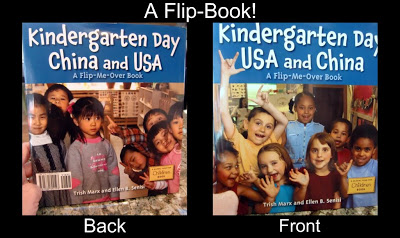
The latest treat we received from the Global Fund for Children is Kindergarten Day USA and China by Trish Marx and Ellen B. Senisi. The premise of the book is basic: simple text from a child’s point of view and lots of big, colorful photos track a typical kindergarten day in the United States and in China.
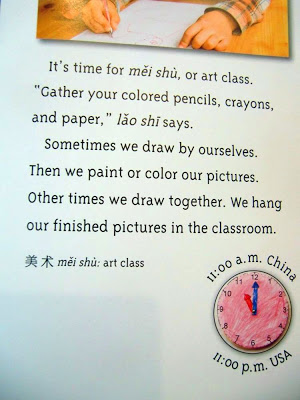
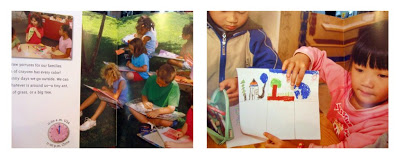
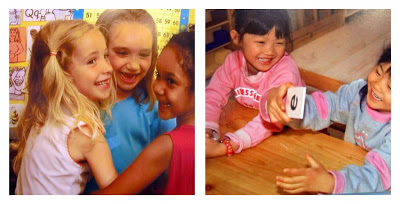
First of all, we love the way the book is cleverly set up as a flip book. One half is the Schenectady, New York class but when you finish that section you close the book and flip it around to read about the Beijing children’s day in the other half. We also liked that each page has a clock that shows both the time in Schenectady and the time in Beijing. This gives a real-time sense of what is going on for the children in each country. Finally, we enjoyed the fact that the China section has some Chinese words sprinkled throughout and briefly explains pinyin, encouraging young readers to try to pronounce the Chinese words.

The authors successfully create a connection between the two classrooms on different sides of the globe through parallel activities. Each class has a birthday celebration. There is a slight conflict (being too loud, not sharing toys) that will be familiar to all children wherever they live. We see both classes eat lunch and have outdoor recess. Children in each class interact with their friends and work on reading. And at the end of the sections, both classes mention thinking about the other class and wonder if the other class thinks about them too.

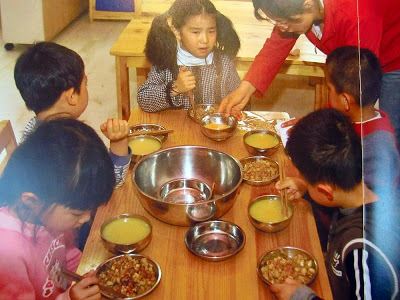
Children will see that although there are some interesting differences in life in the other country (for example we see the American children served lunch in a cafeteria, whereas the Chinese teacher prepares lunch for the children and it is eaten in the classroom with chopsticks), there are actually far more similarities. Children in both countries laugh and cry. All the children enjoy friends, playtime, drawing and reading.

My kids (ages 5, 8, and 10) are fascinated by Kindergarten Day and have read it through several times, even the older two. I really like how the Global Fund for Children’s multicultural books take advantage of childrens’ natural curiosity about other children to teach the important lesson that although we might be different in some minor ways, people are basically the same wherever they live. If every human could learn this basic truth at a young age, and develop a sense of curiosity about other countries and cultures, wouldn’t the world be a much happier and more harmonious place!

Kudos (yet again!) to the Global Fund for Children for helping to promote international awareness and understanding among children.

Kindergarten Day USA and China is available either directly from Global Fund for Children (hardcover or paperback), or Amazon (also in hardcover or paperback).

My other Global Fund for Children recommendations:

Global Babies

Nasreen’s Secret School

Blog Widget by LinkWithin

Panorama Theme by Themocracy